





Leaving academia was the first major pivot for Dr Tom Williams. The Number 8 Bio CEO reflects on how the independence, resilience and communication skills he developed at AIBN have been central to his startup journey.
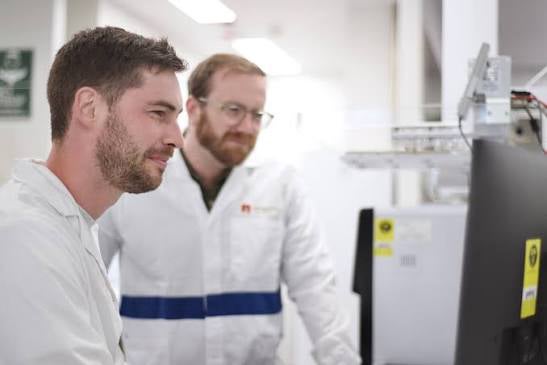
Following his PhD at AIBN with Professor Lars Nielsen, Dr Williams went down the academic track – pursuing a successful career at Macquarie University in Sydney, establishing a large automated microbiology laboratory.
His academic path was progressing well, with a tenured lecturer position and approximately 17 people in his research group, but he became increasingly interested in commercialisation.
“I felt like I could have more fun and impact in the commercialisation and startup world,” he said.
In 2022, he and his business partner founded Sydney-based Number 8 Bio which now has 20 staff.
Building Number 8 Bio
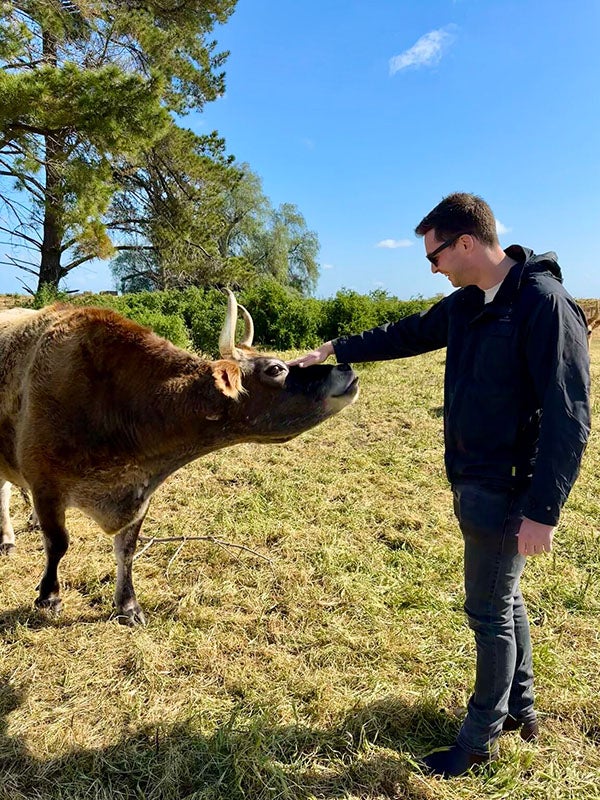
Number 8 Bio’s mission is to convert methane from a climate problem into an opportunity for farmers.
“Not only is methane a greenhouse gas, it is also wasted nutrition,” said Dr Williams.
“We’ve spent most of the past 4 years in deep-tech mode, developing our product Vantage™, and now we’re commercialising and scaling up the manufacturing and this year we have our first eight customers.”
Vantage™ is an active methane inhibitor encapsulated in a bolus, which is a large ‘pill’ about the size of a lipstick.
The bolus remains in the stomach of grass-eating cattle and sheep for six months, slowly releasing the inhibitor and decreasing methane levels.
For farmers, reducing methane could also mean retaining more of the nutrition that would otherwise be lost.
“The productivity opportunity for farmers is huge, because about 90 per cent of cattle and sheep are grass-fed rather than eating grain in feedlots.”
Doing good for the world
“The achievement I’m most proud of since I left AIBN is definitely making a product that customers want to buy that does good for the world.”
“It sounds really simple, but there's years of pain and learning involved in doing that,”
He’s also proud of the students that he trained in the capability he set up at Macquarie University.
“All my students have gone on to successful careers, so that feels good.”
Taking risks
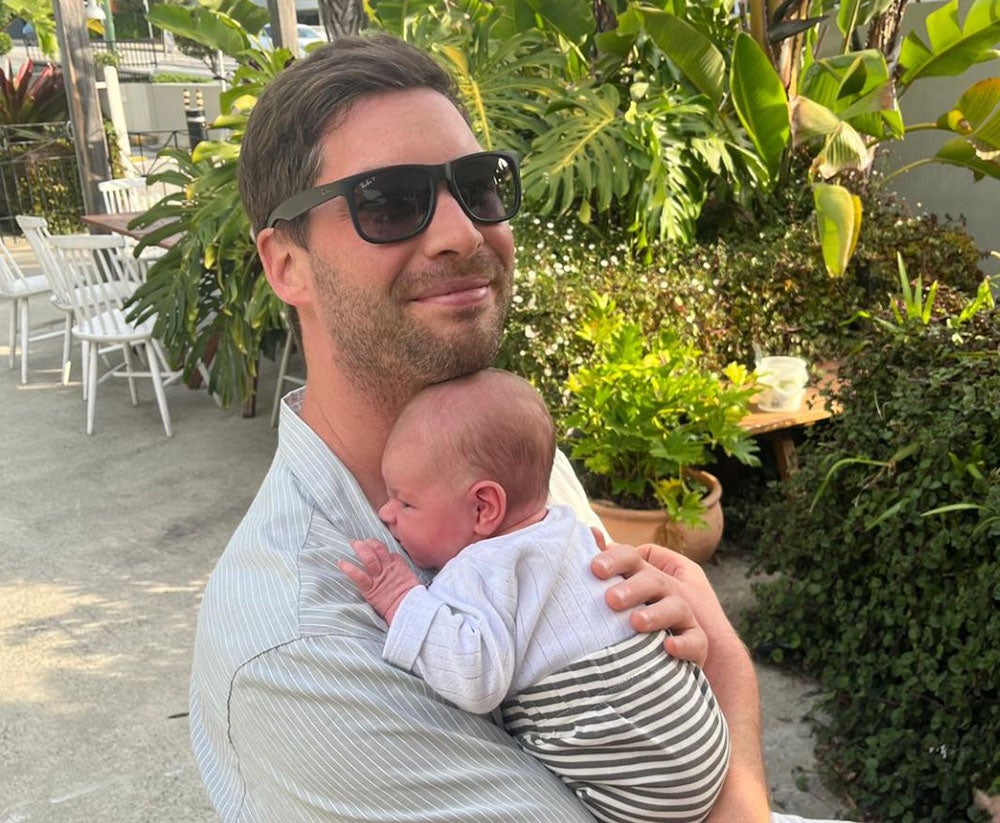
In 2022, juggling an academic career, embarking on a startup and then becoming a father brought Dr Williams to a point where he was at breaking point.
“I tried to do all three and it didn't work – it was a tough year – I was burnt out and it was clear that I couldn’t do it all”
“I thought I'm not ditching my company and I'm not ditching my daughter, so academia had to go”
A brave move, but ironically Dr Williams reflects that becoming a father made him more willing to take risks.
“The responsibility of being a parent makes some people seek out a secure, corporate job – I went in the other direction.”
A transformation
“I gave up my academic career and concentrated my energies on fatherhood and the startup.”
“But it was a major transformation – I had to rewire my brain.”
Instead of focusing on publications, citations and grants, he became absorbed in understanding customers, unit economics, regulation and scale-up.
Dr Williams is now a multifaceted entrepreneur and his challenges are now more about leading other people, raising capital and communication.
The second pivot
Dr Williams’ career pivot held him in good stead when he had pivot again in the startup.
The startup initially used synthetic biology and metabolic engineering to produce methane-mitigating chemicals in baker’s yeast – Dr Williams’ field of expertise.
Although the technology worked well, the cost of production was too high even in the most optimistic scenario.
“It dawned on me that the company was doomed if we just kept going down that path, so we had to make this big pivot, away from synthetic biology.
“I realised that I care more about succeeding and impact than I do about who I am as a scientist, so over the course of a week or two, I was able to change direction.”
Number 8 Bio moved to develop a high-throughput automated system to screen chemicals that alter the fermentation profile of cows.
Starting out at AIBN
Dr Williams joined AIBN as a PhD student in Professor Lars Nielsen’s lab.
He already had a deep interest in synthetic biology, a field that was young at the time.
Dr Williams said that Professor Nielsen created an environment with many PhD students who were all very talented, ambitious and thrived on independence.
“I was attracted by AIBN’s vibrant intellectual environment and high-tech equipment."
“I could just tell that if I went there, the conditions were correct for success.”
During his PhD studies, Dr Williams engineered genetic tools to turn metabolic pathways on and off in yeast.
He said his PhD taught him that biology is an extremely complex network of microbes, metabolites, proteins, enzymes, DNA, RNA, all interacting in ways that humanity does not completely understand.
“It built my resilience as I learnt to try as many ‘shots on goal’ as I could, knowing most of them would fail, and I took that lesson to Number 8 Bio.
“I knew that we had to screen everything known to humanity that might decrease methane emissions to find a product to improve productivity in cattle.”
A hyper-learning environment
He also valued AIBN’s weekly seminars, which are still going strong, where accomplished speakers from around the world share diverse research, both fundamental and applied.
“It was a real hyper-learning environment from diverse fields, so I came away with a really good understanding of how biology works at different levels.
“I also got exposure to the commercial world when guest speakers talked about their successes, but for me it really was a slow burn, because at the time I was obsessed with academia and had no ambition to go into that world.”
Transferring skills to business
Dr Williams says that principles he learnt in academia have been central to his company’s success.
“Science is more about storytelling and imagining things before they exist more than the wider public would realise – and those two things are directly transferable to a startup.”
During my PhD, I felt like I was always prepping a talk whether it was for a team meeting, my division, the whole Institute or externally for a conference.”
“Storytelling and communication, both written and oral and visual, that's the bread and butter of even a junior researcher, and that's all directly transferable to business.”
“And pitching your papers to journal editors and applying for grants – that’s actually sales and marketing.”
Curiosity, challenge and mentorship
Dr Williams says he’s been really fortunate to have good mentors all the way through his career and continues to have them now, including Professor Esteban Marcellin who is now the Director of UQ’s Biosustainability Hub.
“My supervisor, Professor Nielsen is deeply curious and intellectual coupled with a focus on whether ideas can work in the real world – he knows what industry wants and what’s going to work at scale.
“When you are an inexperienced PhD student, you're full of all these crazy ideas and you need some guidance on how to refine them.
“We used to joke that you’d take your idea to him and he would pick it apart from the first principles of physics – he’d say, it’s impossible, but go ahead and try it anyway, I might be wrong.”
Becoming resourceful and resilient
The most unexpected thing Dr Williams gained from his PhD was an enduring sense of self-reliance.
“It gave me the ability to work anything out, be resourceful and resilient,” he said.
Scientists experience many ups and downs through discovery and failure – this is just a normal journey, but I wasn't quite aware to the extent that would develop through a PhD.”
It is a lesson that has stayed with him through academia, entrepreneurship and every change of direction along the way.

Join The Network
Stay on top of our industry news and developments, events and opportunities, by joining The Network
Sign up todayLearn more