
The BASE mRNA facility, housed at AIBN, is part of a consortium of companies, universities, and research institutes with the potential to receive up to $57 million ($US40 million) funding under the Advanced Research Projects Agency for Health (ARPA-H), an operational division within the US Department of Health and Human Services.
The program aims to build a nationwide network of US hospitals that can produce personalised RNA medicines on demand, so patients can receive treatment within a week of diagnosis.
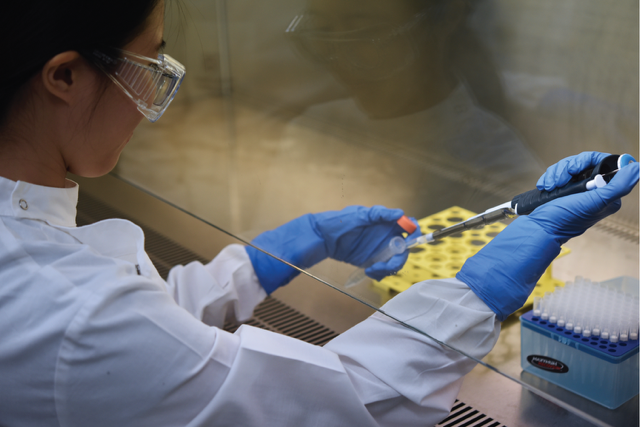
Within the consortium, BASE is leading the development of technology that analyses the accuracy and safety of each RNA medicine before it reaches a patient, a critical process known as quality control.
“This is Australian-designed technology at the centre of one of the most ambitious biomanufacturing programs in the world,” BASE facility director Professor Tim Mercer said.
“Our aim is to speed up how quickly these medicines can be produced and checked, so more patients can access them, wherever they are.
“We are building an automated system that can test each medicine and confirm it is ready for a patient within days.”
At the heart of the system is nanopore sequencing, a technique that reads individual RNA molecules to help verify the quality, integrity, and safety of the final product.
“It’s an approach we have developed and proven at BASE, and it means one test can do what used to require many different tests,” he said.
The potential of mRNA
BASE facility director Professor Tim Mercer said RNA medicines could be designed for individual patients, from personalised cancer vaccines to treatments for rare genetic diseases.
“The same mRNA technology used in the COVID-19 vaccines is now increasingly being applied to cancer and other diseases,” Professor Mercer said.
“Today these medicines are made in a handful of large, specialised factories, and it can take months for a patient to receive their treatment.
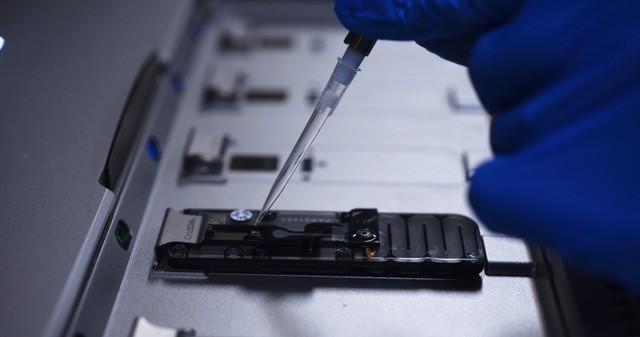
“This program is about bringing production to the patient’s bedside, delivering RNA medicines within days of diagnosis, instead of months.”
Professor Mercer said a system prototype will initially be designed and built at BASE’s laboratories at the Translational Research Institute in Brisbane, where it will be able support the development of personalised mRNA medicines here in Australia.
Once working, the system will then be assembled at Houston Methodist Research Institute in Texas, one of the largest health networks in the US, and installed to test RNA medicines.
“Being selected by the US Government to lead this work is a recognition of the expertise we’ve built at BASE, and of Australia’s growing capability in mRNA,” Professor Mercer said.
About BASE
BASE is a non-profit mRNA-LNP research infrastructure facility, funded through the National Collaborative Research Infrastructure Strategy, based at the AIBN. It’s mission is to help researchers develop new mRNA medicines. With end-to-end capabilities in software design, mRNA manufacture and LNP formulation, BASE scientists have experience in the pre-clinical development of mRNA medicines.
Acknowledgements and collaborations
This project is funded under the Advanced Research Projects Agency for Health (ARPA-H)’s Genetic Medicines and Individualized Manufacturing for Everyone (GIVE) program.
BASE is a leading Australian national mRNA facility. Supported by Therapeutic Innovation Australia through NCRIS. BASE has produced thousands of custom mRNAs for researchers across Australia, helping them develop new mRNA vaccines and medicines to treat disease.
HDT Bio is a clinical-stage biotechnology company based in Seattle, Washington, with a mission to develop innovative immunotherapies and preventive technologies for cancer, infectious diseases, and global health security.
The company's proprietary LION™ delivery platform enables the development of scalable, deployable vaccines and immunotherapies suited for both public health and biodefense applications.
Want to learn more about this story or how you can partner with AIBN on ground-breaking research?
Contact us via email: communications@aibn.uq.edu.au
or phone: +61 414 984 324


