





Developed at AIBN and SCMB, UQ’s Molecular Clamp technology could help improve health outcomes for millions of people by enabling new vaccines against life-threatening respiratory viral infections.
Its US$1.15 billion upfront acquisition by Sanofi in 2025 provides the opportunity and capability for the technology to progress at a global scale.
AIBN was thrust into the global spotlight during the COVID-19 vaccine race, but the work underpinning the Molecular Clamp technology began long before 2020 as a true collaboration across UQ.
And it continues today, going from strength to strength as it is applied to the development of a wide range of vaccines.

A bold idea takes shape
Respiratory viruses are a major global health challenge, placing a significant burden on health-care systems and the economy.
There are serious risks of hospitalisation and death for infants, older adults and people who are immunocompromised.
The challenge is compounded by the sheer number of circulating viruses, including respiratory syncytial virus (RSV), Influenza (‘flu’), SARS-CoV-2 (COVID-19), and rhinoviruses and adenoviruses which cause the common cold.
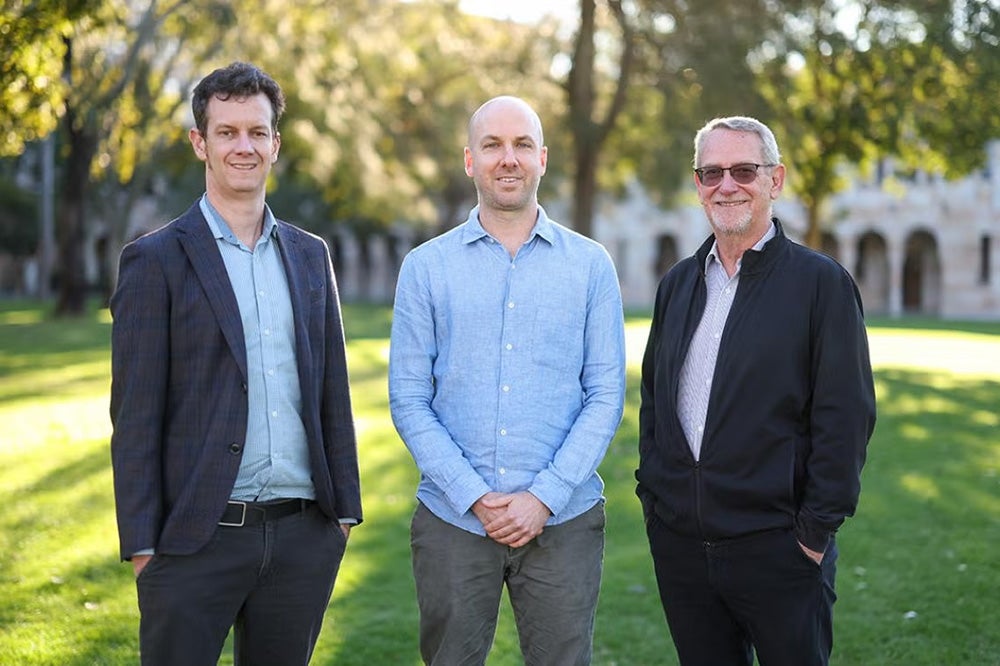
In 2012, Professor Keith Chappell, Professor Daniel Watterson and Emeritus Professor Paul Young set out to produce a vaccine and their first step was to stabilize existing viral vaccines.
“We have vaccines for some of these viruses, but not all, the reason being is that these viruses are really complex – shapeshifters in fact.” Professor Keith Chappell
Blocking the shape shifter
During a viral infection, proteins on the surface of a virus change shape as they fuse with and enter human cells.
The form of the protein before fusion – known as the pre fusion shape – is the most effective shape at triggering a protective immune response.
However, this shape is also highly unstable and can easily collapse during vaccine development.
The Molecular Clamp is a small, synthetic scaffold that locks viral proteins into the unstable pre fusion form so that the immune system is exposed to the virus in the shape most associated with protective immune responses.
Building on the team’s successes, UniQuest negotiated investment from the healthcare venture capital firm Medicxi Ventures, leading to the establishment of Vicebio in 2019, a biotechnology company dedicated to developing Molecular Clamp technology for commercial viruses.
The company is now part of Sanofi.
In 2018 the research team at UQ also partnered with the Coalition for Epidemic Preparedness Innovations (CEPI) with a focus on pandemic viruses to develop a rapid response pipeline to develop and test new vaccines in as little as six months.
Ready for the race
The beauty of the Molecular Clamp is its versatility: its structure stays the same across different vaccines.
Once the genetic sequence of a new virus is known, the relevant viral protein can be incorporated into the existing vaccine design.
In the case of COVID-19, this allowed the SARS-CoV-2 sequence to be rapidly incorporated as soon as it became available.
When the pandemic emerged, the team was already well prepared, with the Molecular Clamp technology ready to go and with funding support from CEPI, the Queensland and Australian Government and philanthropic donors, the team set out to develop a vaccine for COVID-19.
The manufacturing process was also relatively straightforward, with utilised existing infrastructure at the National Biologics Facility (NBF) for biological products such as antibodies, readily adapted to produce the vaccine.
“We began working that very same day that the sequence came out. And in less than six months, we started the clinical trial – it was an incredible achievement.”
Professor Keith Chappell
Multiple Therapeutic Innovation Australia (TIA) nodes prioritised the project during the initial COVID-19 lockdown.
NBF led the accelerated development effort leading to the first clinical trial, dosing its first participant within 5.5 months, a remarkable timeline for a new biologic.

A setback, not the end
The vaccine against SARS-CoV-2 was safe and elicited a strong immune response but sadly it wasn’t all good news.
Well-known for its high stability, the researchers had engineered part of a HIV protein into the design.
In the trials, it produced a false-positive result in HIV tests.
Despite high safety and strong immunogenicity, this was a significant issue that could not be overcome quickly enough for the researchers to stay in the race.
“We were of course devastated when the decision was made to halt our COVID-19 vaccine, but we had to keep looking forward.”
Professor Keith Chappell
The Clamp comes back stronger
The researchers’ resilience prevailed.
The UQ Vicebio team returned to the lab and led the re-engineering of the Molecular Clamp without the HIV component.
Within a year they confirmed it performed as well as, or better than, the original technology across four different viruses.
Attention for Vicebio had now turned to the next challenge, combination vaccines – single vaccines which protect against multiple respiratory viruses.
For example, RSV, human metapneumovirus (hMPV) and parainfluenza virus (PIV3) together account for more hospitalisations than influenza, highlighting the potential impact of this approach.
“In 2023 the world had moved on. The RSV vaccines were coming.
Now we needed a bivalent vaccine, or maybe even a trivalent vaccine to target 2 or 3 respiratory viruses at the same time.”
Professor Keith Chappell

The four-degree advantage
Another desirable characteristic of the Molecular Clamp vaccines is their straightforward storage requirements.
Unlike some vaccines which need ultra-cold storage or to be reconstituted from powder, they only need standard refrigeration at 4oC.
This significantly simplifies transport, storage and administration, helping to reduce logistical barriers and make the vaccines more accessible to countries around the world.
Pandemic ready
The team working on the CEPI project had also been putting its rapid-response capabilities to the test with 100-day challenges using the re-engineered Molecular Clamp technology to create a vaccine from scratch – all part of the pandemic preparedness strategy.
“We don’t know when or where the next viral threat will emerge, the Molecular Clamp can improve how quickly we respond and save more lives.”
Professor Keith Chappell

From discovery to global impact
The acquisition of Vicebio and the Molecular Clamp technology by Sanofi in 2025 remains the largest transaction involving intellectual property from an Australian university.
The tenacity and belief of the team of researchers, commercialisation, IP and legal staff at AIBN, The University of Queensland, UniQuest and Vicebio has been second to none.
“The story of the Molecular Clamp technology describes an incredible human adventure. The team could have given up, but they didn't.
They made the technology even stronger.”
Emmanual Hanon, Head of Vicebio
And the enduring scientific legacy is a technology with the potential to transform global health by saving lives and reducing the impact of respiratory illness.

Join The Network
Stay on top of our industry news and developments, events and opportunities, by joining The Network
Sign up today