





Researchers at AIBN have been awarded grants through the Australian Government’s Economic Accelerator (AEA) program to propel their research towards commercialisation.
Dr Run Zhang and his team are working with Winechek Pty Ltd to develop rapid testing for sulphur dioxide, a key preservative in wine which must be carefully monitored for compliance and quality.
Associate Professor Cheng Zhang and his team are developing approaches to upcycle PFAS ‘forever chemicals’, transforming potentially hazardous chemicals into high-value raw materials for industrial applications.
The AEA program is part of the Australian Government’s University Research Commercialisation Action Plan, which aims to translate promising research into real-world outcomes.
Rapid testing for safer wine
Dr Run Zhang is working with Winechek Pty Ltd, a company of wine scientists with laboratories in major wine growing regions (Margaret River, Barossa Valley and Yarra Valley), to develop a rapid and affordable paper-based test for sulphur dioxide, a common preservative used in winemaking.

“Sulphur dioxide helps keep wine fresh, but it can also affect the taste, breach safety requirements and deter customers who prefer natural or additive-free products,” Dr Zhang said.
Join The Network
Stay on top of our industry news and developments, events and opportunities, by joining The Network
“Wine samples have to be transported to a lab for time-consuming testing, so we wanted to find a solution where winemakers could rapidly test their wine onsite.”
Dr Victoria Hughes from Winechek said the precision of laboratory-based analysis is critical at key points in the winemaking process, but quick, accurate on-site testing is required at other stages.
“Winechek Pty Ltd owns and manufactures the Vintessential TM test kit brand which provides test kits for wine, beer, cider and other beverage analysis,” she said.
“We have a long history of working with winemakers to create on-site intuitive solutions and working with Dr Zhang is another exciting step that keeps us at the forefront of innovation in this industry.”
Dr Zhang and his team have developed sensor technology which rapidly detects sulphur dioxide.
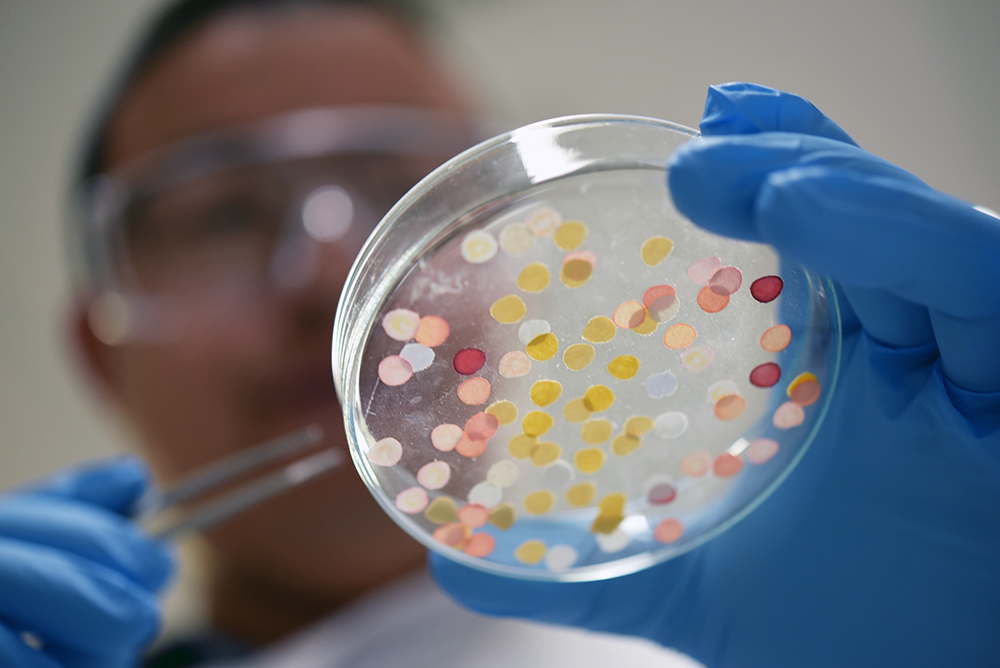
The test is provided as a paper strip that changes colour in one minute, with results easily read via a smartphone.
“Using this funding, we will deliver an industry-ready paper sensor prototype.”
“This real-time monitoring will reduce the reliance on costly lab tests and has potential applications in other food and beverage sectors,” Dr Zhang said.
Turning PFAS waste to wealth
Dr Xuemei Li is leading the project in the Zhang team, which focuses on repurposing per- and polyfluorinated substances (PFAS) waste.

She said getting rid of PFAS is one of the toughest environmental challenges we face.
“PFAS have proved to play a critical role in many modern technologies, from electronics and semiconductors to energy storage, automotive, waterproofing and more,” Dr Li said.
“Our idea is simple, to understand how these materials can be turned into safe and valuable materials, like the building blocks for batteries.”
Current methods to treat PFAS waste can be energy-intensive and costly, highlighting the need for new scalable approaches grounded in science.
To address these challenges, the research team is collaborating with Chemours, a global manufacturer of fluoropolymers, and Australian nanotechnology company Advanced Nanomaterials.

Chemours’ role in the project is to provide technical expertise, material samples and analytical testing support, helping researchers evaluate the feasibility and performance of emerging processes.
Advanced Nanomaterials will provide commercialisation expertise and industry networks to facilitate market validation and accelerate translation toward practical application.
“We are using a mechanochemical ball-milling method which degrades fluorinated material waste rapidly and efficiently and allows recovery of fluorine-containing products which can be reused as industrial raw materials,” Dr Li said.
“Having these processes in place will strengthen Australia’s role in recycling fluorine resources and lower the cost of managing hazardous waste,” Associate Professor Cheng Zhang said.

The project reflects a broader commitment by researchers, industry and government to explore innovative science-based pathways that support sustainability, resource efficiency and responsible manufacturing of essential chemistries.
Want to learn more about this story or how you can partner with AIBN on ground-breaking research?
Contact us via email: communications@aibn.uq.edu.au
or phone: +61 414 984 324


