
Four Australian Institute for Bioengineering and Nanotechnology (AIBN) researchers have secured more than $4.3 million in the Australian Research Council’s (ARC) 2026 Future Fellowships scheme.
The funding will drive ambitious research spanning brain health, advanced materials, biotechnology and next-generation electronics, while supporting four AIBN researchers to build their programs and pursue bold new ideas.
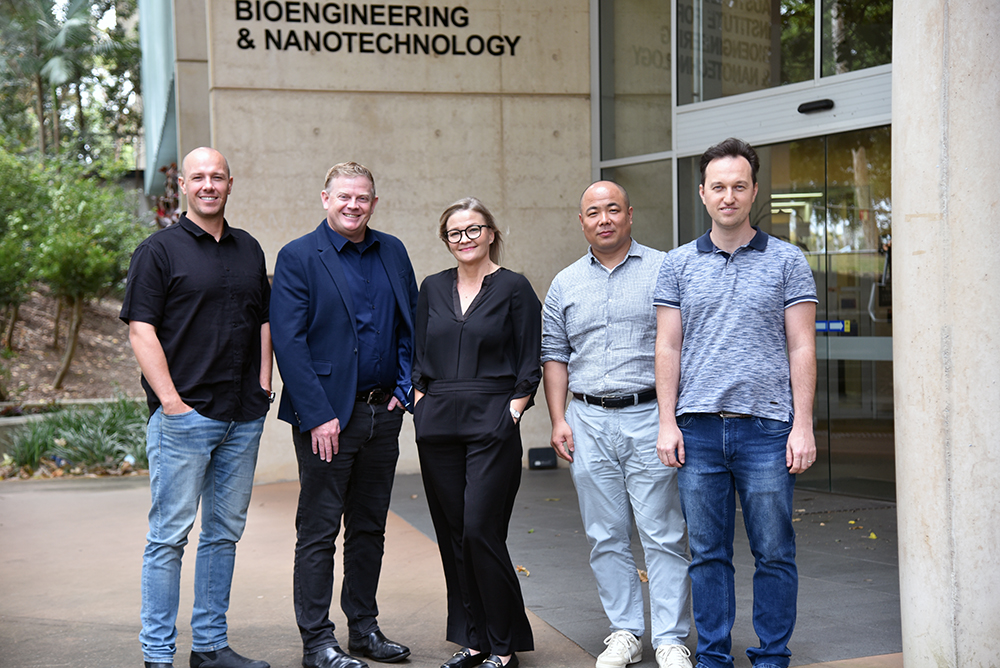
More than 290 projects will share in over $344 million through the 2026 round, the Australian Government’s largest investment in the scheme to date.
For AIBN Group Leader Dr Merja Joensuu, a $1.17 million will open a new chapter in research challenging what we know about how the brain produces energy.

Join The Network
Stay on top of our industry news and developments, events and opportunities, by joining The Network
Dr Joensuu will now combine advanced imaging capabilities at AIBN’s National Imaging Facility with multi-omics techniques to uncover how this largely unexplored energy pathway work.
By building a clearer picture of how the brain fuels its most fundamental processes, the project could lay the foundation for new ways to support lifelong brain health.
Dr Valentin Bobrin, a Postdoctoral Research Fellow working with Professors Andrew Whittaker and Michael Monteiro, will use his almost $1 million to reimagine how advanced materials are designed and created.
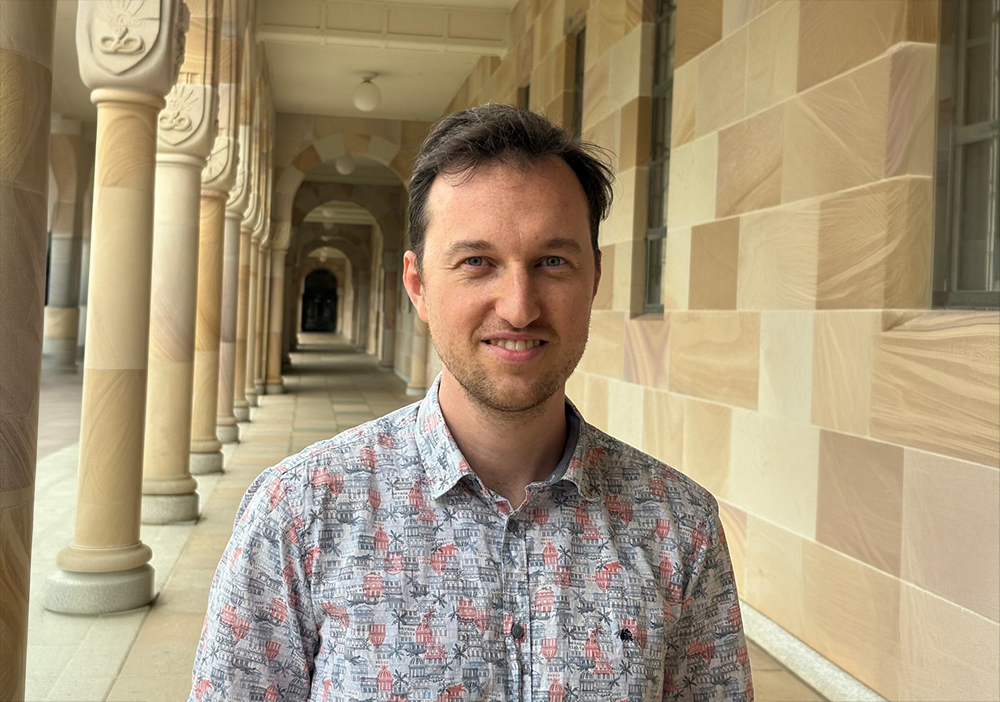
His project will bring together polymer chemistry, nanoscience and additive manufacturing to find new ways to control how polymers organise themselves, from their molecular structure through to larger three-dimensional forms.
This approach could unlock sophisticated new materials for applications including sustainable metal recovery and quantum technologies. It will also help strengthen Australia’s advanced manufacturing capability and equip a new generation of researchers to lead materials science innovation.
Senior Research Fellow Dr Changkui Fu, based in the Andrew Whittaker laboratory, received almost $1.17 million to develop safer and more effective stealth polymers for biomedical technologies.

Stealth polymers are designed to help materials move through the body without attracting unwanted responses from the immune system, but current materials trigger responses, reducing their safety and performance.
Dr Fu will apply advanced polymer chemistry to overcome this challenge, creating next generation stealth polymers with improved molecular and immunological properties, and paving the way for safer and more reliable healthcare technologies.
AIBN DECRA Research Fellow Dr Julian Steele, who holds a joint appointment with UQ’s Faculty of Science, has received just over $1 million to tackle one of the greatest barriers facing a promising new class of semiconductor materials.

Halide perovskites have enormous potential for next generation solar cells, LEDs, semiconductors and other technologies, but their short-life span under real-world conditions has prevented wider commercial uptake.
Dr Steele will develop new ways to stablise these materials that are compatible with the large-scale production of perovskite thin-film devices. By bringing durability and manufacturability together, his research could move perovskite technologies closer to real-world use.
From uncovering how the brain produces energy to creating safer biomedical materials and more durable electronic devices, the four fellowships demonstrate the breadth of AIBN research and its potential to shape a healthier and more sustainable future.
The Australian Institute for Bioengineering and Nanotechnology is committed to turning bold ideas into knowledge and technologies that deliver benefits for society.
Want to learn more about this story or how you can partner with AIBN on ground-breaking research?
Contact us via email: communications@aibn.uq.edu.au
or phone: +61 414 984 324


