





As 2025 draws to a close, we reflect on our successes at AIBN. This year, we have reaffirmed our position as a powerhouse for translation and innovation and secured more than $63 million in funding. With our world-class researchers and facilities, we’re working together with industry, translating our scientific breakthroughs to solve society’s challenges.
Here’s a few of our many research highlights.
Billion-dollar deal takes UQ vaccine tech to the world
We saw UQ’s Molecular Clamp technology, which streamlines vaccine development, reach a landmark milestone with its acquisition by one of the world's leading healthcare companies Sanofi for US1.15 billion.
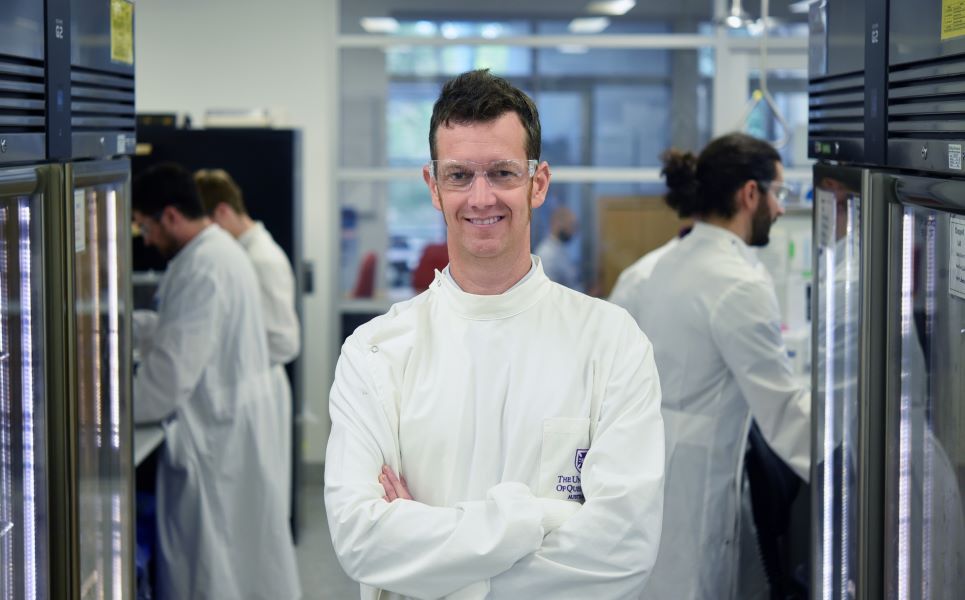
The deal is the largest to commercialise intellectual property (IP) from an Australian university and is an opportunity for the technology to be accelerated through the final stages of translation to address global health challenges.
Developed by AIBN's Professor Keith Chappell, who has a joint appointment with School of Chemistry & Molecular Biosciences (SCMB), alongside UQ's Emeritus Professor Paul Young and SCMB's Professor Daniel Watterson, the technology stabilises viral proteins in their native shape, enabling the immune system to recognise and respond to them more effectively.
Discovering fat fuels the brain unlocks new dementia treatments
A team led by AIBN’s Dr Merja Joensuu showed that certain fats are essential for fuelling neurons, the brain’s communication cells. The study centred on the gene DDHD2, which enables neurons to break down fats and produce fatty acids, acting like a switch for this fat-powered energy pathway. The team discovered that under normal conditions, around 20% of a neuron’s energy, and even more during high activity, comes from this fat-burning process.

For years, scientists believed that healthy neurons relied solely on glucose and its metabolites to power their activity, but this research challenges this thinking and opens the door to new treatments for neurological diseases, where energy failure plays a role, including dementias and metabolic brain diseases.
Detecting pregnancy complications using a nanosensor
Professor Yusuke Yamauchi and his team have developed an advanced sensor that can detect pregnancy complications such as gestational diabetes and preeclampsia as early as 11 weeks with a simple blood test. Currently, these cannot be identified by traditional screening methods until the second or third trimester, leaving it sometimes too late for effective intervention.
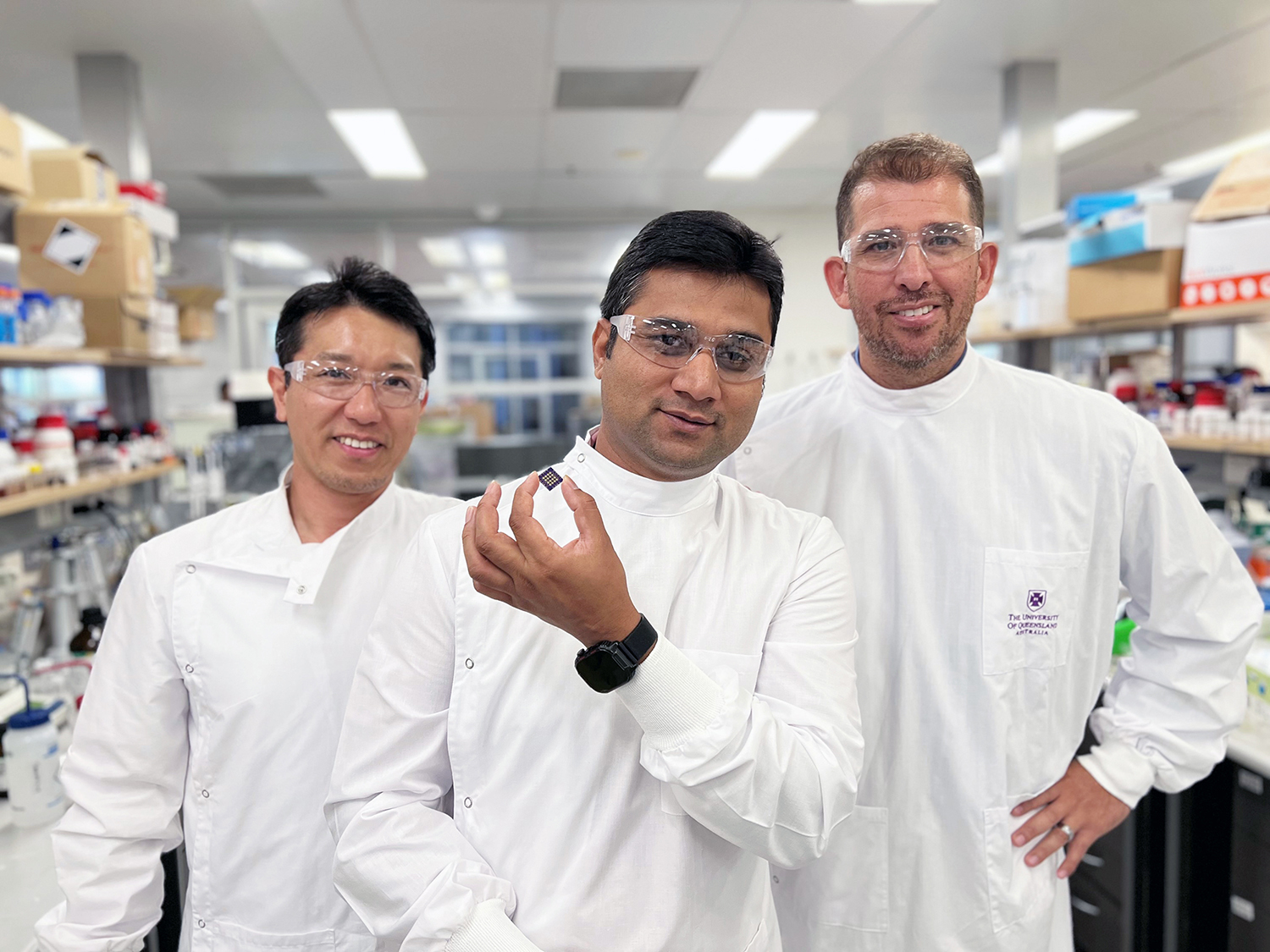
This technology has been developed using nanomaterials which detect low concentrations of biomarkers in the mother’s blood.
The researchers hope that the sensor will become widely available, significantly impacting health care for mothers and their babies and saving the healthcare system millions of dollars annually.
The next phase of research will include a large-scale clinical trial involving at least 2000 women, with the aim of bringing this life-changing diagnostic tool to hospitals, clinics, and pharmacies worldwide.
Revolutionising the removal of forever chemicals
Australia has about 700 wastewater treatment plants and they are among the last lines of defence we have when it comes to polyfluoroalkyl substances (PFAS) – aka ‘forever chemicals’.
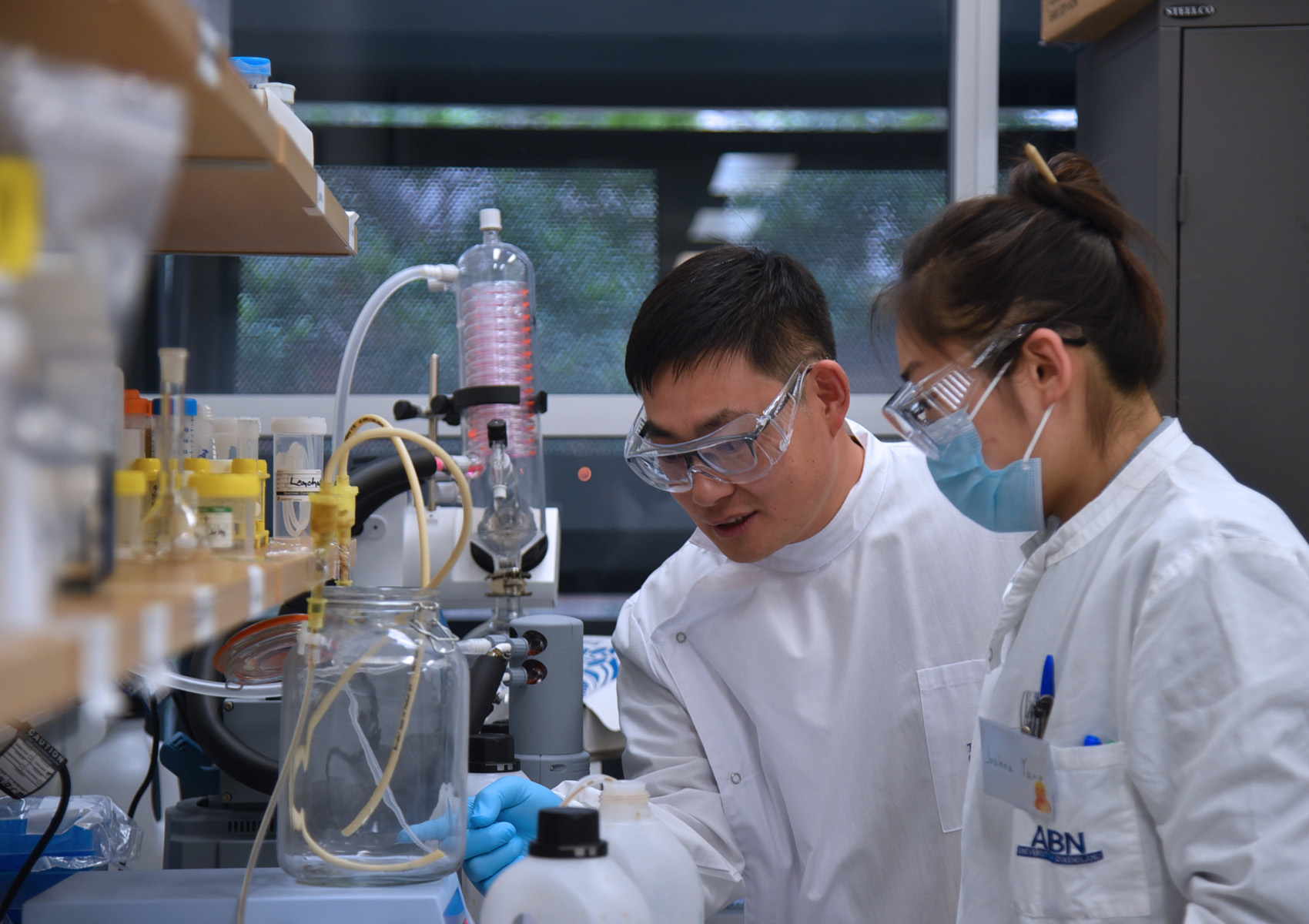
AIBN's Dr Cheng Zhang has developed a magnetic resin which removes PFAS from water through an innovated magnetic ion-exchange technique that operates at room temperature. And this year it was announced that Dr Zhang will lead a $7 million project with AIBN colleague Dr Zicheng Su and a consortium of commercial partners led by ViridAU to show that his magnetic resin can also remove PFAS from semi-solid effluent.
This technique not only eliminates the need for current energy-intensive and pollutant-generating methods but also allows biosolids treated with magnetic resin to be safely repurposed as PFAS-free compost for agricultural and landscaping use.
Clinical trial for MND gets the green light
AIBN’s Associate Professor Shyuan Ngo is now leading a clinical trial of 150 patients with Amyotrophic Lateral Sclerosis (ALS), the most common form of motor neurone disease (MND).

The trial will test whether the angina drug Trimetazidine can improve function and quality of life of patients, by altering metabolic factors that affect the development and progression of ALS. More than 2,000 people have MND in Australia and currently there is no cure or effective treatment.
On UQ Giving Day, AIBN raised over $65,000 to enhance the trial – contributing to the procurement of Ametris Actigraph LEAP smartwatches to capture real time clinical insights.
This clinical trial is part of Dr Ngo’s ongoing research exploring how metabolic factors, such as nutrition, may play a key role in managing ALS, and builds on Dr Ngo’s success as Co-Director of UQ’s new Centre for MND Research, officially launched earlier this year.
Creating a 3D-printed DNA testing device for all
AIBN’s Dr Will Anderson has designed and developed a low-cost ($60) fluorometer which can measure the amount of DNA in a sample and named it the Do-It-Yourself Nucleic Acid Fluorometer – DIYNAFLUOR.

Commercial fluorometers cost thousands of dollars and while working on DNA-based diagnostics, Dr Anderson challenged himself to make one as cheaply as possible, but ensuring quality control was matched.
Now DIYNAFLUOR is a fully open-source project, with all design files and build instructions freely available online for download. It can be printed on a standard desktop 3D printer and assembled in under a day from off-the-shelf electronic components.
DIYNAFLUOR is being built and tested around the world, for example by researchers requiring portable technology to detect new variants in viral outbreaks, and also by schools for outreach activities, making science more accessible.
Accelerating the discovery of smarter, safer materials
A computer simulation to save time and money is the power of a new open-source tool, developed at AIBN this year by Megan O’Mara and her team.
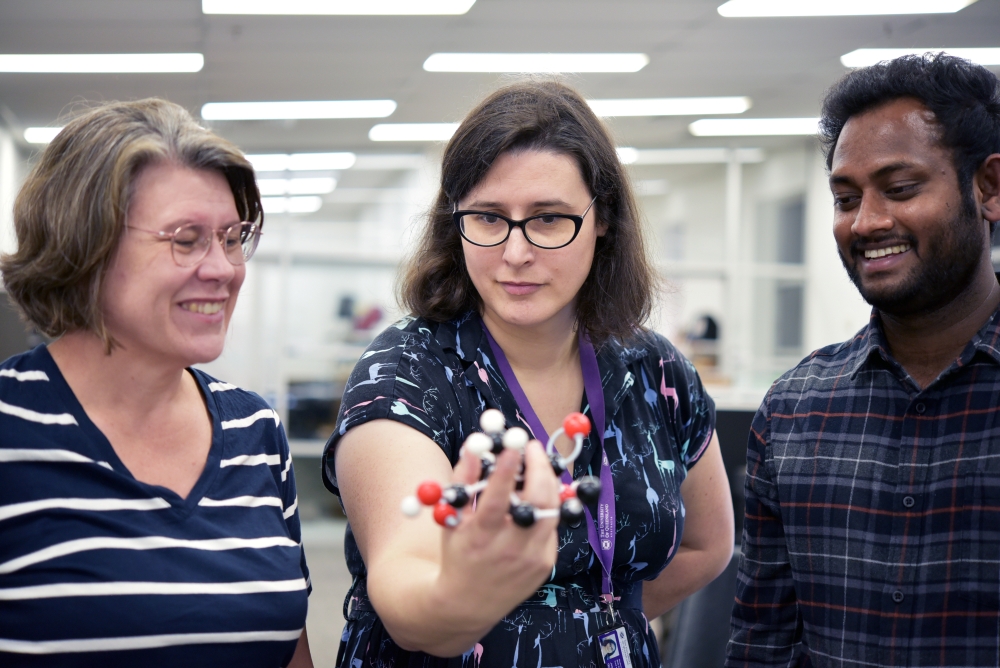
The molecular modelling tool PolyConstruct has transformed the once painstakingly manual task of setting up polymer simulations, that took months, into a digitised process that takes just a day.
By modelling materials at the atomic level, scientists can test how they behave in different environments – like in the human body, under heat, or when exposed to chemicals – before they’re ever made in the lab.
PolyConstruct opens high-level materials discovery to a much broader group of researchers, those around the world who do not have advanced manual coding skills, so they can explore materials for medical, environmental and industrial use.
Setting a world record in solar efficiency
In an Institute of highflyers, no year is complete without setting a new world record, and this one by AIBN is for the efficiency of eco-friendly solar cells.
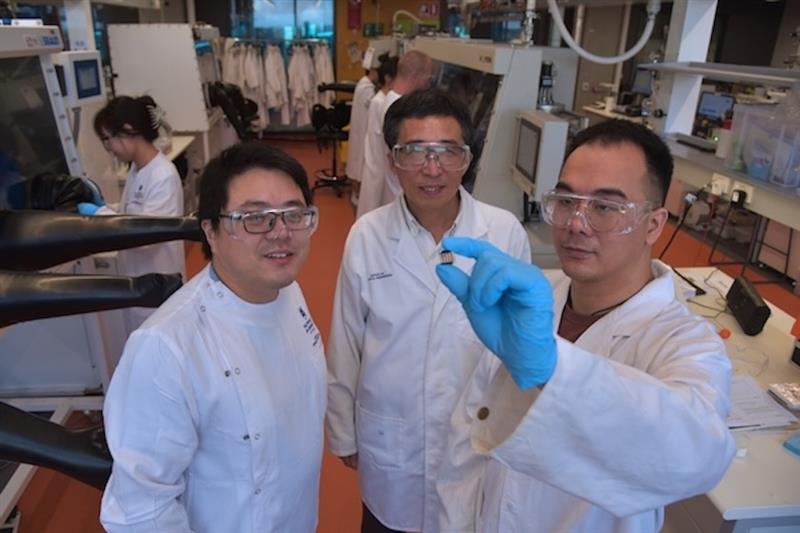
A team led by Professor Lianzhou Wang explored tin perovskites as an alternative to traditional silicon-based solar cells to achieve a breakthrough certified efficiency of 16.65 per cent.
The researchers can carefully control how the tin material forms during fabrication, enhancing the durability and performance of tin-based cells.
Lead-based perovskites can also deliver high efficiencies, but lead is highly toxic and can cause pollution, so finding this improved efficiency with tin-based materials paves the way for eco-friendly alternatives. With further improvements, new possibilities include flexible solar panels, indoor applications, and lightweight devices powered by clean, lead-free energy.
Professor Lianazhou Wang has a joint appointment with the School of Chemical Engineering.
Battery breakthrough powers sodium batteries
Dr Cheng Zhang and his team have developed a new battery material to elevate sodium metal batteries closer to commercial use.

Sodium metal batteries offer an eco-friendlier alternative to lithium-ion batteries but safety and performance issues have been roadblocks to their real-world use.
The team developed a new solid electro polymer, to replace liquid electrolytes which are flammable and tend to overheat, as seen in electric vehicles and e-scooter battery fires.
So far, the researchers have tested the solid electrolyte sodium batteries at 80°C and they lasted an impressive 5,000 hours, retaining over 91% of their original capacity after 1,000 charge cycles. The next challenge is to optimise efficiency at room temperature, the critical step toward making the batteries commercially viable.
This year, our researchers shone on the global stage, earning numerous national and international accolades. Here we highlight two that exemplify excellence and impact:
AFR Higher Education Award for Industry Engagement

We are delighted that Professor Esteban Marcellin’s work has been recognised by the Australian Financial Review (AFR), and this award celebrates his talent for turning great science into real-world impact.
His recent collaborations with industry have led to the creation of the brand-new $60 million UQ Biosustainability Hub - Australia’s one-stop shop for helping major companies transform their production practices and create carbon-neutral, economically viable products and materials.
The Hub brings together cutting-edge research projects and some of the world’s biggest companies to find solutions to challenges like climate change, biodiversity, mining sustainability and future food production.
Professor Esteban Marcellin has a joint appointment with the School of Chemical Engineering.
Our winning Queensland Woman in STEM
AIBN’s Associate Professor Joy Wolfram won the Queensland Women in STEM Prize, Judges’ Award this year.
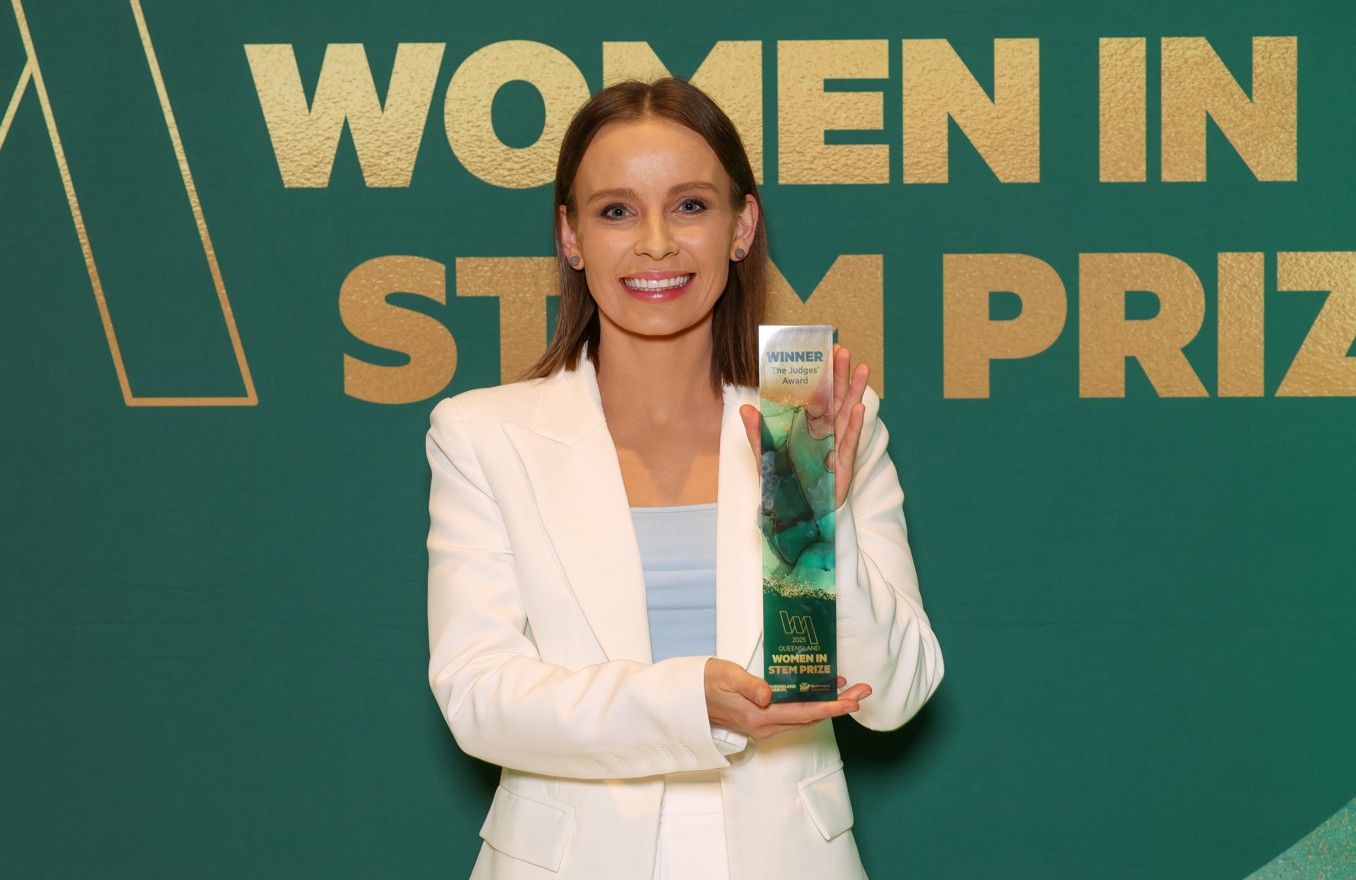
Now in its tenth year, the prize fosters passion and drive among women and girls, encouraging their active participation and leadership within STEM.
Dr Wolfram is a biomedical engineer whose research focuses on using nanoparticles to treat disease, including cancer and cardiovascular disease. She is also a passionate educator and advocate for diversity in STEM and has created outreach initiatives such as the Nanomedicine Workshop, part of Faculty of EAIT outreach program.
Associate Professor Joy Wolfram has a joint appointment with the School of Chemical Engineering.
Thank you for celebrating the successes of 2025 with us. As we step into 2026, we’re excited to continue pushing boundaries on the nanoscale, collaborating with industry to translate innovation into real-world impact.
Next year marks a new chapter – farewelling our dedicated Director Professor Alan Rowan after a decade of leadership and celebrating AIBN’s 25th anniversary. Here’s to another year of discovery, partnership, and progress.
Want to learn more about this story or how you can partner with AIBN on ground-breaking research?
Contact us via email: communications@aibn.uq.edu.au
or phone: +61 414 984 324


