





The fund supports ECRs to develop and build relationships with end-users, based on sharing and translation of knowledge and developing mutually rewarding partnerships that improve the impact of research.
Joining forces to diagnose Chronic Kidney Disease
Dr Theo Crawford is developing a diagnostic test for kidney and heart failure in collaboration with academic and clinical researchers at UQ and industry partner HA Tech, Australia’s largest antigen test kit manufacturer.

“There is no cure for Chronic Kidney Disease (CKD), and it’s a growing and under-recognised public health crisis in Australia, listed as an underlying or associated cause in 58 per cent of adult deaths in 2022,” said Dr Crawford.
Cardiovascular disease, particularly heart failure, is a leading cause of death in people with CKD.
“Early detection and ongoing monitoring are the only means to slow disease progression and improve patient outcomes, but current diagnostic methods are either too costly, labour-intensive, or insufficiently sensitive for widespread population screening.”
Dr Crawford and the team are using rapid antigen diagnostic technologies to develop a lateral flow device that facilitates early detection of CKD, with the goal of reducing long-term healthcare costs associated with CKD and associated heart failure.
Partnering with HA Tech enables technical de-risking, rapid prototyping and access to manufacturing expertise.
Making Australia’s graphite battery ready
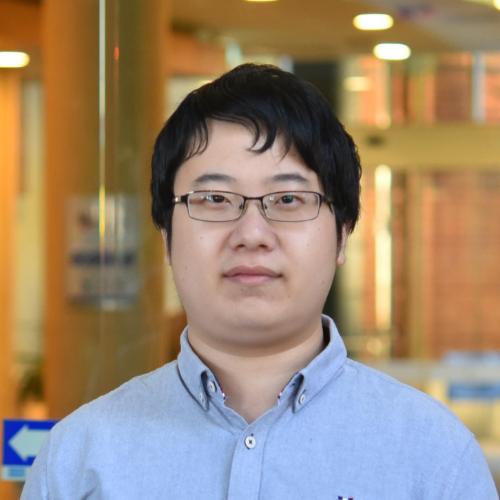
Dr Tongen Lin and his team have secured funding with their industry partner Graphinex International Pty Ltd. to develop fast-chargeable and long-endurance graphite anodes for lithium-ion batteries.
Graphinex owns the third-largest high-purity graphite deposit in the world, located in Esmeralda, Queensland and is the sole supplier of battery-grade graphite in Australia.
“Currently electric vehicles rely heavily on lithium batteries, which charge quickly and last a long time, and graphite is the most widely used material for their anodes,” said Dr Lin.
“Australia lacks local industries capable of producing battery-grade graphite, compromising the integrity of the domestic battery supply chain”.
Dr Lin’s team are modifying Graphinex’s natural graphites to meet the fast-charging and long-endurance requirements of next-generation lithium batteries.
“We will reconstruct and optimise the particle structure of graphite, develop multi-functional interface engineering to improve reaction kinetics, prevent side reactions, and stabilise the structure to maximise the fast-charging capability and lengthen the life cycle of the anodes.”
The research will be critical for Graphinex to develop its anode material manufacturing technologies, filling a critical gap in Australia’s domestic supply chain for battery materials and strengthen Australia’s position in the global battery market.
Dr Lin has a joint appointment with UQ’s School of Chemical Engineering.
Want to learn more about this story or how you can partner with AIBN on ground-breaking research?
Contact us via email: communications@aibn.uq.edu.au
or phone: +61 414 984 324


