





Distinguished Professor Sang Yup Lee awarded the AIBN Translational Research Award.
Professor Sang Yup Lee has been awarded AIBN’s Translational Research Award, recognising his extraordinary global impact in biotechnology and lasting contribution to establishing systems metabolic engineering at AIBN and in Australia.

The award recognises researchers and industry partners who have excelled in their field and globally driven impact and innovation.
Professor Lee, currently Senior Vice President for Research at Korea Advanced Institute of Science and Technology (KAIST), has published around 800 papers and registered 868 patents in biotechnology, and is a member of numerous academies and societies internationally.
Professor Lee, as a visiting professor, made frequent visits to AIBN in 2007, working closely with Professor Lars Nielsen to develop a research strategy for sucrose-based biomanufacturing.
Their research helped The University of Queensland (UQ) establish an ambitious metabolic engineering program.
This program enabled collaborations on sucrose with the University of California, synthetic aviation fuel with Amyris, and waste gas fermentation with LanzaTech and SkyNRG.
This work ultimately led to the establishment of the $60 million UQ Biosustainability Hub, which opened this year.
During his visit to AIBN to receive the award, we had the opportunity to interview Professor Lee about his research and the future of bioengineering.
A world leader in bioengineering
“I have been researching metabolic engineering for the last 31 years. I work on microorganisms. I engineer them to produce basically anything, but mostly in two areas: sustainability and health promotion.”
“We metabolically engineer bacteria to produce chemicals that can replace petrochemicals (e.g. benzene, toluene, xylene) and materials that are made from petroleum, like polymers and plastics.
"For example, we have produced various types of polyesters that are completely bio-based and biodegradable and are now working towards producing nylons.
"And we produce compounds that are traditionally extracted from plants or replace artificial colours, flavours and fragrances.
“Many artificial colourings are detrimental to our health. Now the U.S. Food and Drug Administration (FDA) has officially moved to ban or phase out several synthetic, petroleum-based food colorants.
“We were successful in making a red colorant using a biosynthetic pathway and we moved on to make the whole rainbow. These colourings are safe and pure.
“Now using our technology, we can use sustainable biological resources and even carbon dioxide as a raw material instead of petroleum.
Receiving the Translational Award
“It's a great honour to receive this award. It was an exciting time almost 20 years ago when I was a visiting professor at AIBN.
“As a person who participated in the initial stages of AIBN’s development and watched the research advance exponentially over the years, I’m proud to have been a part of this Institute.”

A long-lasting relationship
“My sabbatical at AIBN in 2007 aligned very well with my research because I had a very good friendship and working relationship with Professor Lars Nielsen.
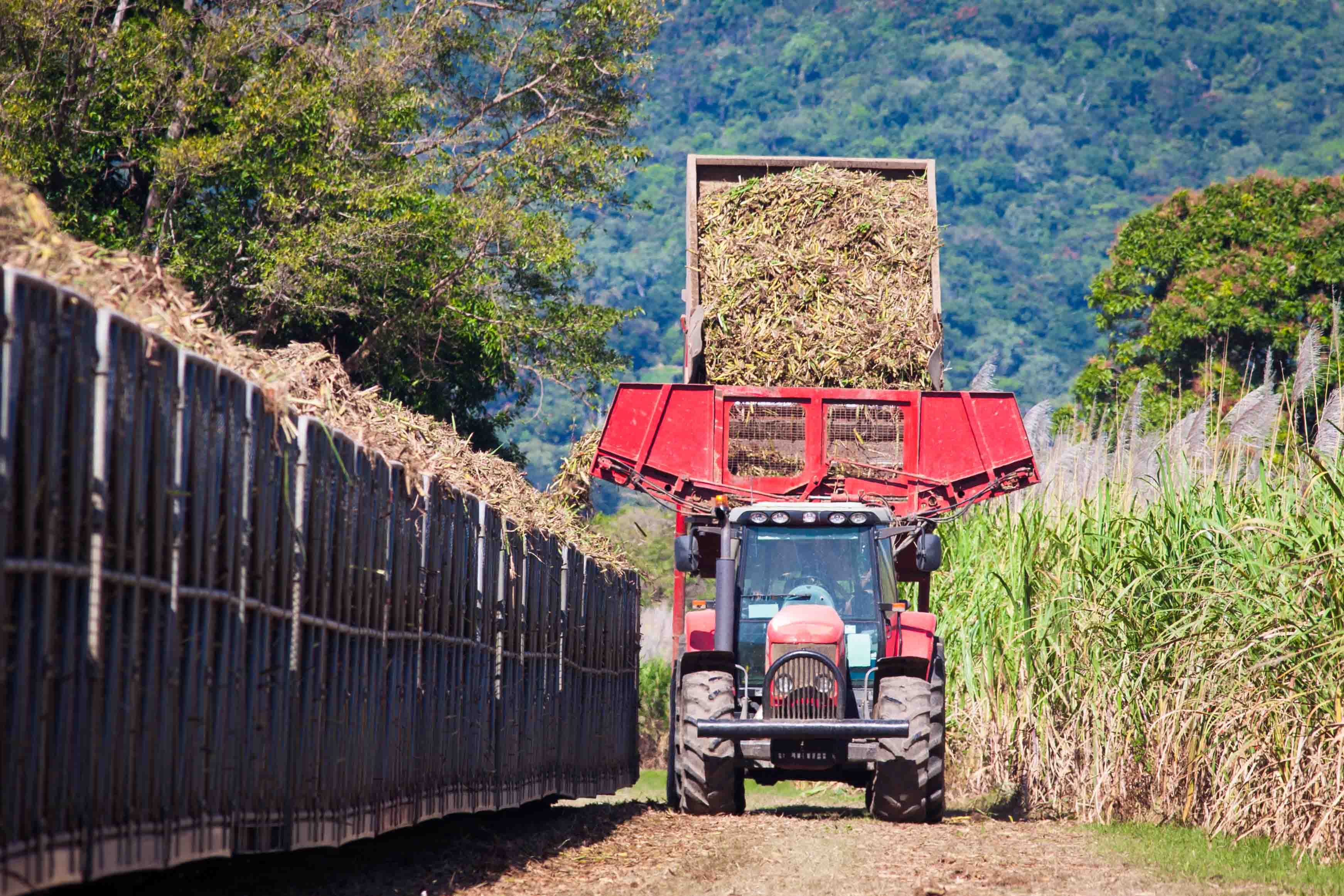
“We had a good time initiating the various projects. Most importantly, we formulated a bio-refinery program starting out with making sugar-based butanol because Queensland is famous for sugar.
“We wanted to use extra sugar to produce something that's useful and environmentally friendly. Butanol is a more efficient fuel than ethanol and an important industrial solvent.
“Over the years I have kept in touch with Lars and collaborated extensively with him.
“I follow AIBN’s progress from afar, but visiting now after 15 years of absence proves to me that AIBN has been successful and evolved in the right direction.
“AIBN is very well known throughout the world because it has done fantastic work in different fields.
"AIBN is judged as one of the leaders in the bioengineering sector.”
Bio-based economy is the future
“Is a bio-based economy realistic in the future? It is definitely coming because of the pressure on resources and the environment.
“It will play an increasingly important role.”
“With climate change, we need to replace at least 30 to 40 per cent of the fossil-based economy with a bio-based economy.
“Otherwise, we are committing crime to the next generations who will live 100 years from now.
“People are living longer and we can keep people healthier by producing medicines and nutrients using biotechnology.
“The importance of biotech will only increase as we move further towards personalised medicine and nutritionally balanced or personalised diets.
“This will help people age with a higher quality of life.”
Barriers to translating synthetic biology to industry
“Translation is no issue for high-value, health-promoting molecules. They can be commercialised any time, subject to regulatory approval.
“The barriers exist for low-price, high-volume products like chemicals that will replace petroleum industry products.
“For those we need a global agreement on how much we're going to reduce the use of fossil-based products and replace them with bio-based, more sustainable products.
“The technology is there and production costs are dropping significantly, but we need subsidies and public awareness on the use of sustainable chemicals rather than fossil-based chemicals.
“All this takes time.
“A global agreement to move to sustainable goals will drive the bioeconomy.”
“By only replacing 30–40 per cent of an $8 trillion market, it will blossom.”

Join The Network
Stay on top of our industry news and developments, events and opportunities, by joining The Network
Sign up todayHow institutes like AIBN help translation to real-world applications
“Without research at AIBN and the vision to translate it successfully, the bioeconomy is not going to be there.
“Companies often lack the time and effort to pursue fundamental questions, which is what AIBN does best.
“Collaboration with industry is one big contribution of AIBN.”
“Once transferred to a company and ideas are integrated with their technologies, translation happens much faster and with a high success rate.

“An institute like AIBN has three roles.
Number one is educating the newcomers and making good researchers.
“Number two is working with companies to produce not only work of academic excellence published in journal papers but also help to translate technologies.
“Number three is producing new startups.
“AIBN is achieving all these three contributions.
It is a good asset to not only The University of Queensland, but also to Australia.”
Want to learn more about this story or how you can partner with AIBN on ground-breaking research?
Contact us via email: communications@aibn.uq.edu.au
or phone: +61 414 984 324


