The development of a new, non-flammable electrolyte material could mean a safer and cheaper alternative to lithium-ion batteries and – thanks to the work of University of Queensland researchers – another step towards a cleaner energy future.
AIBN researchers have secured new funding to help the design of new nanomedicines, diagnostics and strengthen collaborative industry-partnered research projects.
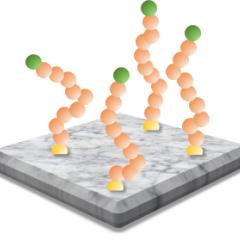
This project aims to develop photo-reactive materials for directing self-assembly of polymers on surfaces. The application is new device for memory storage.
Students will enrol through the Australian Institute for Bioengineering and Nanotechnology (AIBN).
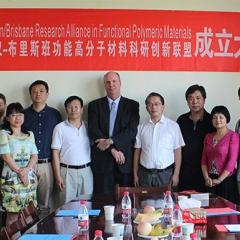
The Australian Institute for Bioengineering and Nanotechnology at The University of Queensland will lead the Brisbane node of the Wuhan/Brisbane Research Alliance in Functional Polymeric Materials.
Studies into better diagnostic imaging for one of the most aggressive forms of brain cancer have attracted $200,000 for a University of Queensland researcher.